
Foundation for National Parks & Wildlife
Description
Foundation for National Parks & Wildlife is an Australian non-government organisation working to protect the country’s wilderness and wildlife.
It raises funds for conservation and environmental education projects, and has funded recovery programs and research for more than 32 threatened species of birds, reptiles, mammals, amphibians and plants. It acquires land through purchase, donation and bequest, and has helped establish more than 50 national parks and nature reserves, including Mungo National Park. It also funds cultural heritage conservation at Aboriginal and European historical sites, and runs the Backyard Buddies education program about native species in urban areas.
The Foundation was incorporated in 1970 by Tom Lewis, then New South Wales Minister for Lands, as the fundraising arm of the National Parks and Wildlife Service. It began as a New South Wales body before expanding to work Australia-wide in 2000. It operates as an independent, non-political charity, keeping administration costs low and not selling or sharing donor details, and is governed by a voluntary board of directors.
Latest news
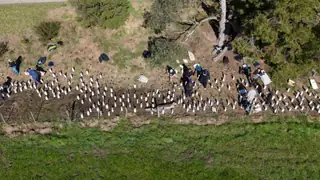
The number almost no one publishes
There is a statistic almost every environmental campaign reports, and almost none of them follow up on: Trees planted. It is an easy number to produce and a difficult one to stand behind, because a tree planted is not the same as a tree that lived. Survival depends on species selection, on soil...
22 Sep 2026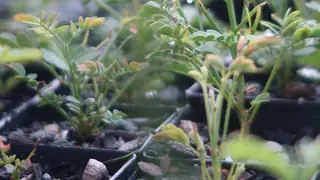
The science of plant selection, and why the species matters
Who are you planting it for? Put a Glossy Black-Cockatoo in a healthy forest and it can still starve. Not because the forest is degraded. Because it is the wrong forest. Last time we wrote that a bush is a building, and that its structure matters more than its tree count. This is the
19 Aug 2026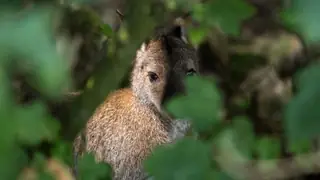
What Does Healthy Bushland Look Like?
It looks messier than you think. The science behind bringing back the bush. At the Mulligans Flat woodland experiment near Canberra, researchers added 2,000 tonnes of dead wood to the ground and waited. Nine years later they counted significantly more reptile species than before. There was a...
13 Aug 2026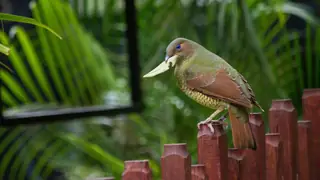
Your Backyard Is Habitat Too: Help Native Wildlife
A quarter-acre block, a shared courtyard, three pots on a balcony rail. To a sugar glider hunting for somewhere safe to land, any of them might be the difference between making the crossing and turning back. Here is how a small patch of Australian natives starts pulling its weight. The map is...
28 Jul 2026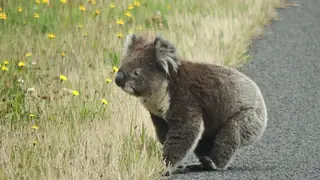
A wildlife corridor is only as wide as its narrowest point
Urban sprawl rarely wipes out a wildlife corridor outright. It pinches them: a subdivision here, a road widening there, a reserve that takes decades to fully secure. Australia is good at identifying the corridors that matter. The harder part, the part that decides whether a population holds on...
14 Jul 2026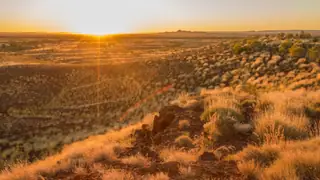
Caring for Country Starts with Listening
Before the first seed goes in the ground, before volunteers gather at the edge of a paddock, before we talk about what a healthy landscape looks like, there’s a conversation that has to happen first. And it starts with listening. This is the foundation of our partnership with Kaurna Kardla on...
7 Jul 2026
Similar organizations

NRDC, the Natural Resources Defense Council, is an environmental advocacy group that combines legal action, science and policy work to protect the planet.

Carbon180 is a nonprofit organization working to design and champion equitable, science-based policies that bring carbon removal solutions to gigaton...

BARK is a place-based forest conservation organization working to transform Mt.