
Eaternity
Description
Eaternity is a Swiss climate-tech and research organization based in Zurich, founded in 2008. It works to make the environmental impact of food transparent and to help transform food systems toward sustainability.
Eaternity builds its tools on Life Cycle Assessment methodology, drawing on an environmental database covering more than 100,000 food products and ingredients. It offers a free carbon footprint calculator and poster referencing the global warming potential of more than 500 raw food products, using a Scope 3 assessment that includes deforestation, methane emissions, production, processing, packaging, transport and preservation.
Eaternity has published CO2 calculations for more than 50,000 retail food products together with the Codecheck app and advocates for CO2 labelling of food. Its eco-label appears on packaging in more than 10,000 retail markets across Europe, showing indicators for climate, water, animal welfare and rainforest deforestation. It serves restaurants, food producers and retailers worldwide, operating from Switzerland and Germany.
Latest news

Upcoming update of the carbon data basis
We are moving our food calculations to open UVEK/BAFU life-cycle inventories with revised process models, together with the reference unit and the rating benchmark. Values and rating thresholds change together on one announced date. What to expect, and how to plan.
14 Sep 2026
Climate ratings that can be verified: our contribution to EmpCo
Together with ESFC we built a rulebook, a sampling approach for daily-changing menus, and the technology to recompute a rating from recipe to result. What that means for the coming independent assessment and for CO₂ values and ratings.
14 Sep 2026
100,000 Supermarket Products, Scored from Open Data
The EOS-Ayce Eurostars consortium has reached its first milestone: a public, methodology-grounded climate score for 100,000 European supermarket products, calculated from open data only. A research preview, available via the Flit demonstrator app.
27 May 2026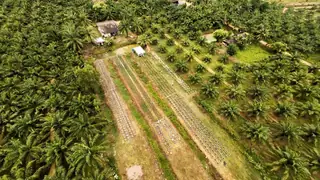
Rice is the most eaten food on earth — and, because of the methane emitted by flooded paddies, one of the most climate-intensive. Together with Hi-Rice we measured two farms in Thailand down to the litre of diesel per hectare. The numbers surprised us a little.
23 Apr 2026
The Forest That Never Grew Back
Seven tonnes. One lever. Half of food's climate cost is currently uncounted — and it happens to sit under soil that used to be forest. A 2018 paper in Nature put a number on what the labels leave out, and the number is bigger than flying, driving and heating combined.
14 Apr 2026
Making Sustainability Measurable in Institutional Catering: A Conversation with necta
How necta and Eaternity are integrating climate data directly into catering operations, turning sustainability from a reporting exercise into a daily management tool.
18 Mar 2026
Similar organizations

The International Union for Conservation of Nature, IUCN, is a membership union working on nature conservation and sustainable development.

Carbon180 is a nonprofit organization working to design and champion equitable, science-based policies that bring carbon removal solutions to gigaton...

Workshop for All Beings is a Polish ecological association devoted to protecting wild nature, based in Bystra in the Beskid Śląski mountains.