
International Consortium of Investigative Journalists
Description
The International Consortium of Investigative Journalists (ICIJ) is a global journalism organization. It produces cross-border investigative reporting on corruption, abuses of power and harms to vulnerable people. Its model persuades rival newsrooms, from large broadcasters and newspapers to small nonprofit outlets, to work together on watchdog journalism they once pursued alone. It has collaborated with more than 140 media organizations across Europe, North America, Africa, Asia and Latin America.
ICIJ relies entirely on donations. It does not pay its media partners, and it is not paid by them for publishing its projects. ICIJ retains a network of more than 290 trusted investigative journalists from over 100 countries and territories, built by invitation. It says it provides greater accuracy and depth through peer scrutiny across cultural and journalistic traditions, offers a layer of security to journalists under threat, and lets stories suppressed in one country appear in another.
ICIJ is headquartered in Washington, D.C. Core team members are based in the United States, Egypt, Australia, France, Spain, Belgium, Hungary, Serbia, the United Kingdom and Ireland. Regional coordinators work across Asia, Africa, Latin America, the Middle East and Europe.
Its investigations include Offshore Leaks, the Panama Papers, the Paradise Papers, the Pandora Papers and the FinCEN Files. These involved hundreds of reporters combing through millions of leaked documents. They have led to public protests, arrests, legal reform, official inquiries in more than 70 countries, and the resignations of national leaders following corruption allegations.
ICIJ builds and maintains data-analysis tools, including machine-learning software, that it makes freely available to other journalists. It trains hundreds of reporters each year, many from poorer countries. It also contributes to conferences and events on investigative techniques.
Latest news
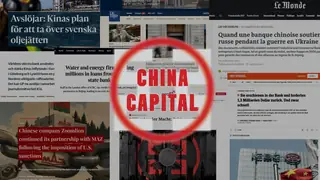
China Capital stories reveal how ICBC advanced China’s political goals across four continents
ICIJ’s media partners uncovered strategic deals and moves the Chinese bank made around the world to further the political priorities of the party-state.
23 Sep 2026
ICIJ journalist Micah Reddy freed after 4 days in secretive Djibouti custody
Reddy and local guide Mohamed Willo Ismael (“Kooki Mahmoud”) went missing Sept. 19 in Djibouti City.
22 Sep 2026
Private equity investor Konstantin Sokolov was also appointed to run a government enterprise fund.
21 Sep 2026
Statement on missing ICIJ journalist Micah Reddy
ICIJ lost contact with our colleague Micah Reddy, ICIJ’s Africa coordinator, and local journalist Mohamed Willo Ismael (“Kooki Mahmoud”), in Djibouti City on Saturday, Sept. 19.
20 Sep 2026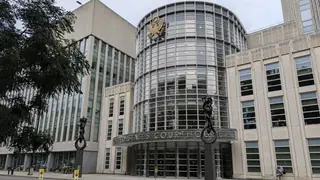
US prosecutors accuse Huawei of ‘far-reaching criminal scheme’ spanning decades
The Chinese tech giant is on trial in New York for allegedly violating U.S. sanctions on Iran and stealing trade secrets as it built its global telecommunications empire.
18 Sep 2026
‘Tinder Swindler’s’ plan for a dating app sparks industry backlash
The convicted fraudster says his new app would enable women to find love safely. The lead trade group for online dating disagrees.
18 Sep 2026
Similar organizations

Freedom of the Press Foundation (FPF) is a nonprofit organization that protects and defends press freedom.

Re:Baltica is a non-profit organization that describes itself as the Baltic Center for Investigative Journalism.

Forbidden Stories is a media organization that continues the investigations of journalists who have been killed, threatened, imprisoned or otherwise...